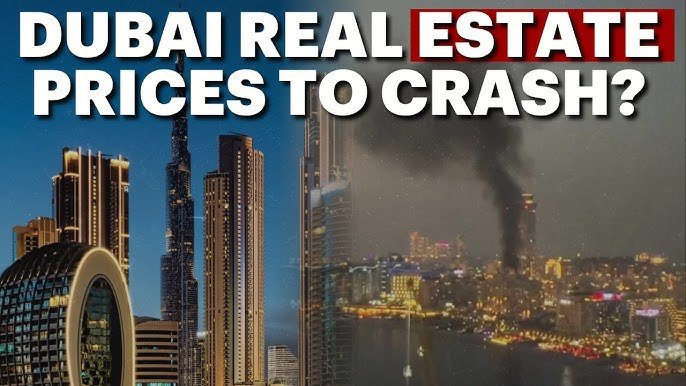
Dubai’s real estate market has long been a symbol of the city’s economic dynamism, attracting investors from around the world. With iconic developments such as the Burj Khalifa, Palm Jumeirah, and the Dubai Marina, the city has been a key player in global real estate, benefiting from its status as a business hub, a tourist destination, and a tax-friendly environment for both businesses and individuals. However, like any booming market, it is not immune to external risks, particularly geopolitical tensions.
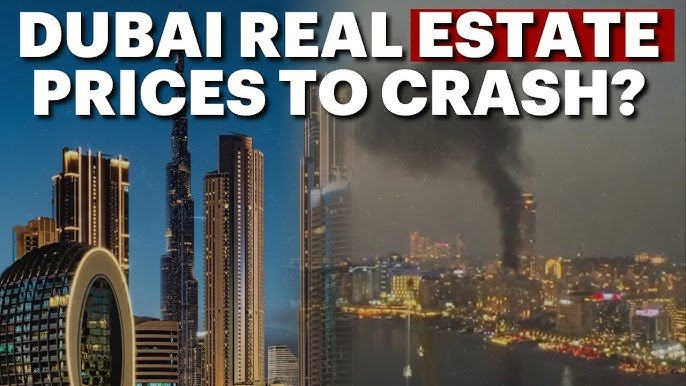
One question that arises, especially in light of ongoing tensions between Iran and the UAE, is whether such geopolitical strains could have a significant impact on Dubai’s real estate market. In particular, could a worsening of relations between Dubai and Iran trigger a real estate crash?
Understanding the Dubai-Iran Relationship
Dubai and Iran share a long history of economic, cultural, and social ties, largely due to their proximity and the UAE’s position as a global trade hub. Dubai has been a key gateway for trade and investment between the Gulf region and Iran, particularly due to the UAE’s position as a neutral ground in the Middle East. Many Iranians have invested in Dubai’s real estate market, with large numbers of Iranian expatriates calling Dubai home.
Dubai’s real estate sector, which attracts investors from the Middle East, Europe, Asia, and Russia, has always been somewhat insulated from regional volatility due to its strategic positioning, luxury appeal, and liberal economic policies. However, political tension with neighboring countries like Iran can influence investor sentiment, particularly when it involves threats to economic stability, security, or trade.
How Geopolitical Tensions Could Impact the Market
While the Dubai real estate market is resilient and has seen substantial growth over the past two decades, geopolitical instability can have significant ripple effects. Here’s how a potential escalation in tensions between Iran and Dubai might affect the real estate market:
1. Investor Sentiment and Market Uncertainty
The real estate market is highly sensitive to changes in investor confidence. If tensions between the UAE and Iran were to escalate, it could create a climate of uncertainty that might deter investors from committing to new property purchases in Dubai. Historically, periods of heightened geopolitical risk tend to lead to capital flight from regions perceived as unstable. Even though Dubai has diversified its economy over the years, the real estate market could still be affected if foreign investors, especially those from neighboring countries, perceive that their investments could be at risk.
2. Decrease in Iranian Investment
Iranian investors have been a significant part of the Dubai property market, both in terms of property ownership and as tenants. A deterioration in diplomatic relations between the UAE and Iran could result in a sharp decline in Iranian demand for Dubai real estate. This would have a two-fold effect: the loss of a major investor base for both residential and commercial properties, and a potential slowdown in the rental market, as many Iranians live and work in Dubai. The lack of this significant demographic could lead to vacancies in the city’s luxury apartment complexes, lowering rental yields and property values.
3. Currency Volatility and Economic Slowdown
The UAE dirham is pegged to the US dollar, which has generally shielded the economy from local currency fluctuations. However, a regional geopolitical crisis could still cause currency volatility, especially if regional stock markets react negatively to rising tensions. A sudden economic downturn could reduce consumer purchasing power and confidence in the real estate market. Moreover, a collapse in oil prices due to conflict, as is often seen in the Middle East, could hurt the UAE economy and its real estate sector, given that the UAE still has significant oil exports despite efforts to diversify.
4. Impact on Tourism and Expatriate Inflows
Tourism and expatriate residents are both key drivers of Dubai’s economy, and a large proportion of the demand for real estate, especially high-end properties, comes from these sectors. If regional tensions were to escalate, there could be a reduction in tourism and a potential outflow of expatriates, particularly from countries like Iran, which has historically sent many visitors and businesspeople to Dubai. This would decrease demand for short-term rentals, luxury apartments, and commercial spaces, further affecting the real estate market. Tourism-based developments like hotels and resorts could also suffer from a lack of international visitors.
5. Capital Flight and Safe-Haven Investment
Dubai has long been seen as a safe-haven for capital, particularly for investors seeking stability in the region. However, if tensions with Iran escalate to the point where security concerns rise significantly, the perception of Dubai as a safe and stable place to invest could erode. Wealthy investors who have traditionally viewed Dubai as a haven for capital preservation might look elsewhere, seeking more secure or politically neutral environments. This could lead to capital outflows, which would decrease liquidity in the real estate market and drive down prices.
Dubai’s Resilience: Can It Weather the Storm?
While the potential for geopolitical tensions to negatively impact Dubai’s real estate market is real, it’s important to remember that Dubai’s economy has shown remarkable resilience in the face of past crises. The city has successfully weathered challenges such as the global financial crisis of 2008 and the economic disruptions caused by the COVID-19 pandemic.
Several factors work in Dubai’s favor to help insulate its real estate market from external shocks:
- Diversified Economy: Dubai’s economy has moved away from being entirely dependent on oil. The emirate has made significant strides in building a robust non-oil economy, especially in sectors such as tourism, aviation, finance, and technology. This economic diversification helps cushion the impact of external shocks.
- Global Investment Hub: Dubai continues to be one of the world’s most important financial centers, and it is home to numerous multinational corporations and financial institutions. The city’s business-friendly environment, tax advantages, and strategic location as a gateway between the East and the West will likely continue to attract global investors.
- Strong Infrastructure and Development: Dubai’s infrastructure, including its modern transport systems, world-class airports, and skyscraper-laden skyline, remains a major draw for international businesses and tourists. The city is also known for its luxurious living standards, which will continue to make it an attractive place to live, even in challenging geopolitical times.
- Regulatory Stability: Dubai’s government has shown a strong commitment to maintaining a stable business environment. Policies designed to protect investors, such as the provision of long-term residency visas for property owners and other incentives, have strengthened investor confidence over time.
Conclusion: A Hypothetical Scenario, Not a Certainty
While geopolitical tensions, particularly those involving Iran, could influence Dubai’s real estate market, it is far from certain that these tensions would lead to a crash. The market’s resilience, Dubai’s diversified economy, and the city’s status as a global investment hub mean that the real estate sector could continue to thrive, even amid regional challenges.
However, a prolonged escalation in tensions or an outright conflict could certainly dampen investor confidence, reduce demand for high-end properties, and cause short-term volatility. The future of Dubai’s real estate market will depend heavily on both regional political stability and the city’s continued efforts to innovate and adapt to global trends.
Ultimately, Dubai’s real estate sector is likely to continue evolving, responding to both internal and external pressures, while remaining one of the most attractive markets for international investors and residents.